Dehumidifier pump vs gravity drain: plan the water route
Choose between bucket emptying, continuous gravity drainage and a pump by mapping the actual discharge path.

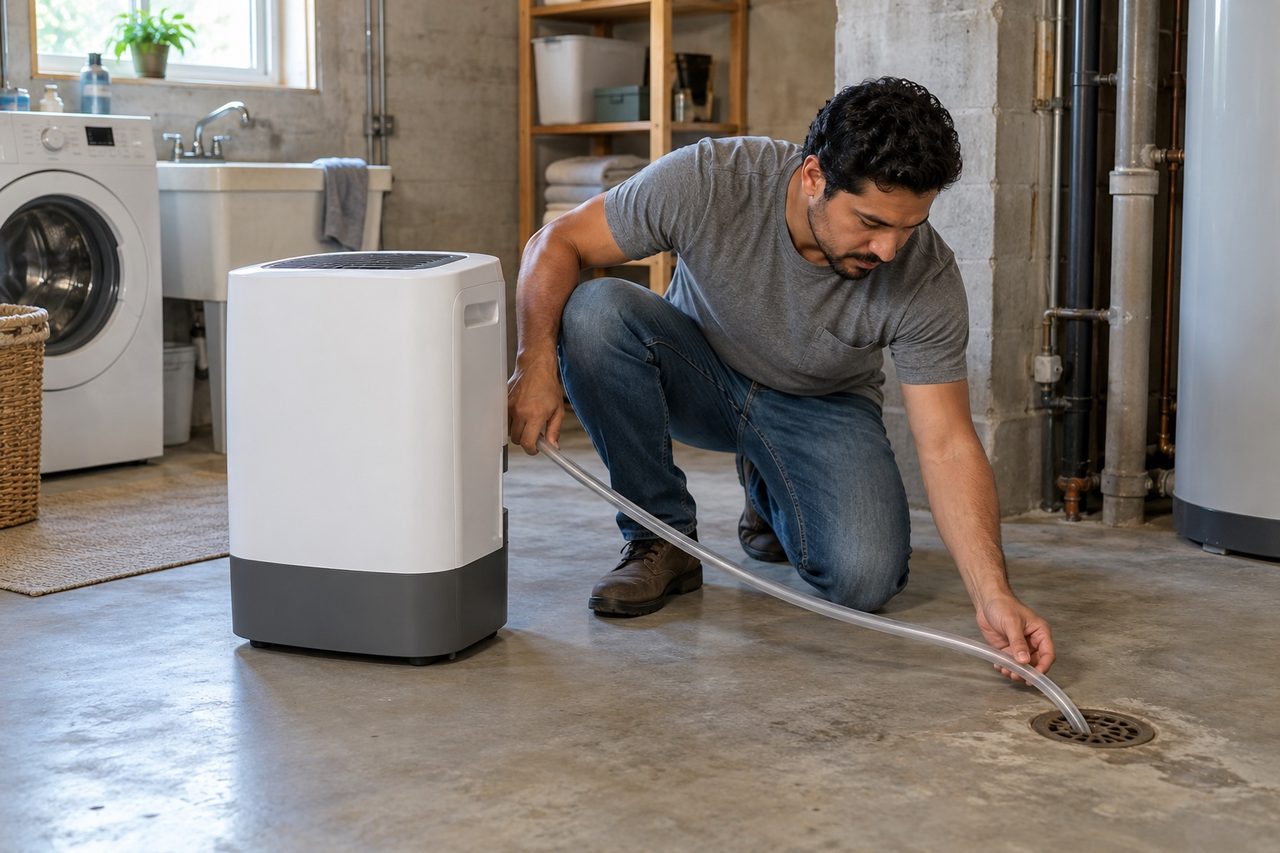
Use a gravity drain hose when a floor drain or sump pit sits lower than the unit along the whole route; choose a built-in or separate condensate pump when the water has to climb or travel far. Gravity has fewer parts to fail, a pump goes where gravity can't.
Continuous drainage saves you the bucket, but only if the whole route works. Walk it once: from the outlet on the unit, along the hose, to the floor drain, the sump pit or the laundry sink. If the water has to climb anywhere on the way, gravity won't get it there. Gravity or pump changes the fittings, the setup checks and what can go wrong while you're not looking.
Our rankings for this: best dehumidifiers with pump, best dehumidifiers with drain hose, best drain accessories, best crawl space dehumidifiers and best crawl space dehumidifiers with pump.
Affiliate disclosureAs an Amazon Associate we earn from qualifying purchases made through links on this page. Commissions never change our ratings.
Sketch the route before shopping
Mark:
- Position: the intended appliance position.
- Outlet height
- Destination: the drain destination.
- Obstacles: anything the hose would need to cross.
A photograph can help, but include approximate measurements and note whether the destination is above or below the appliance. Keep walking paths and electrical connections on the sketch. Do not improvise a discharge into a fixture or building drain without checking that the connection and disposal arrangement are appropriate.
Think about inspection as well as installation. Can you see the entire hose, reach the fitting and notice a leak? A route hidden behind packed storage is harder to maintain. Our placement guide helps balance drainage with airflow and service access rather than treating the nearest corner as the only possible location.
Match the route to the drainage method
- Lower destination with a continuous downhill route: investigate the gravity connection and required fitting.
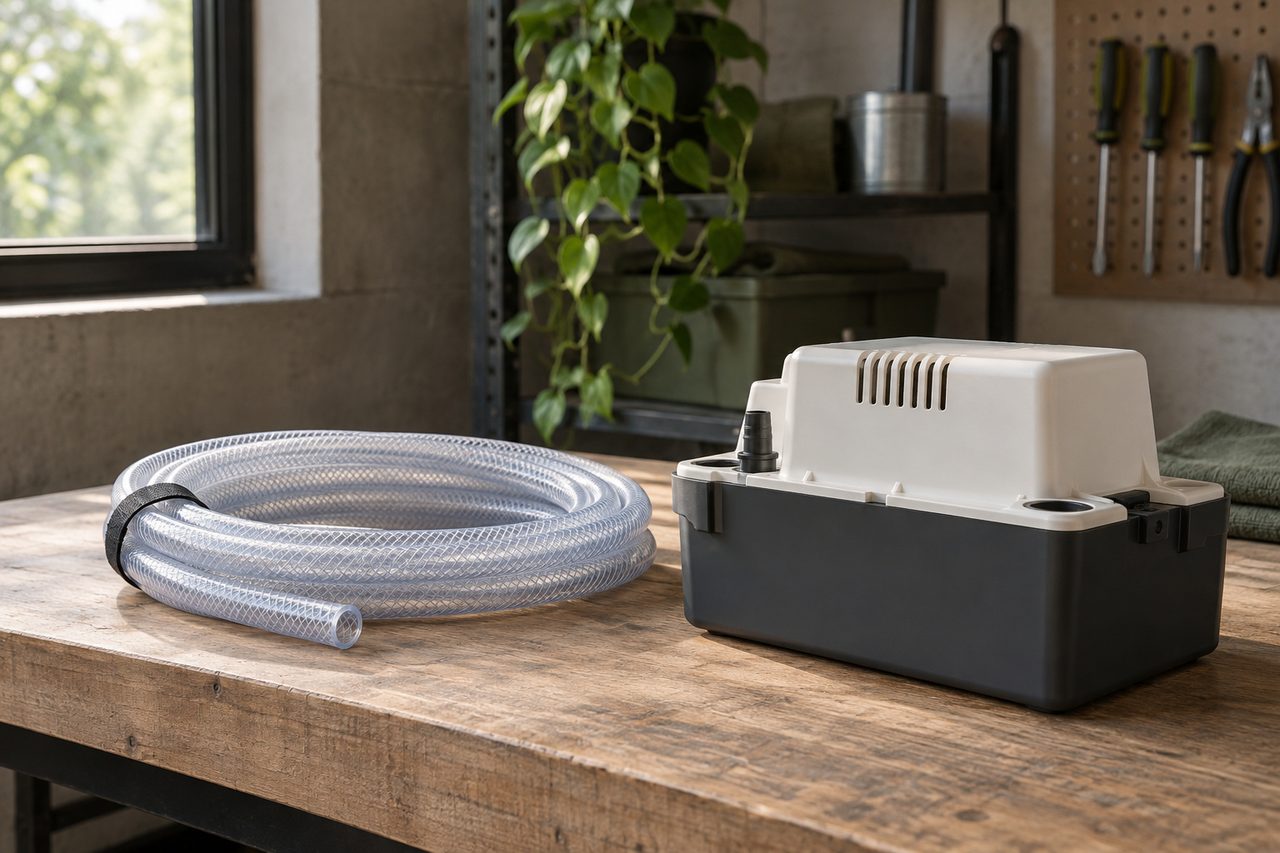
- Discharge must rise: investigate a pump only after checking its documented lift, tubing and destination requirements.
- No verified hose route: plan for accessible bucket emptying while you resolve placement and disposal.
Use this as a routing checklist, then work through the model-specific checks below. A pump label does not confirm that the complete route will work.
Use gravity only where gravity can work
A gravity outlet needs a continuous route to a lower approved destination. Avoid upward loops, crushed sections and hose layouts that trap water. The exact outlet, required adapter and hose specification come from the appliance manual. A product described as supporting continuous drainage does not necessarily include a pump or allow discharge above its own outlet.
Before relying on a gravity route, observe actual drainage during normal operation and inspect the connection for leaks. Follow the manual's bucket-position instructions; some units still require the collection bucket to be correctly seated even when a hose is connected. Do not bypass a switch to make a configuration run. See hose compatibility for the fitting checks that should precede installation.
Treat pump operation as model-specific
A pump may allow discharge to a higher destination, but only within its documented lift and installation requirements. Use the tubing and connectors approved for that exact model. The GE APEL50 / APEW50 / APER50 manual in our sources describes a dedicated pump connection and activation sequence (GE manual); it is an example of why a pump hose should not be confused with a gravity-drain garden-hose connection.
Do not apply that manual's instructions or lift figure to another GE model, another generation or another brand. Find your own model's manual and identify when the pump starts, what warning indicators mean and what happens if it cannot discharge. A built-in pump is not a guarantee against spills, blockage or the need for periodic inspection.
Compare ongoing work, not just initial convenience
Bucket collection avoids a long hose route but creates a regular emptying task. Consider access, the weight you can comfortably carry and where you will dispose of the water. Do not disable the full-bucket mechanism to extend operation. Gravity drainage has fewer active components but still needs a clear route and a secure fitting. Pump drainage adds tubing and pump maintenance to the checklist.
A realistic choice matches how often someone can inspect the basement. If you travel frequently, discuss monitoring and drainage reliability with the equipment supplier rather than assuming the word automatic means unattended indefinitely. Read cleaning and maintenance to include the bucket, filter and any documented pump strainer in your routine.
| Method | What it needs | Recurring task |
|---|---|---|
| Bucket | Access and a place to dispose of water | Regular emptying; never disable the full-bucket stop |
| Gravity hose | Continuous route to a lower destination | Keep the route clear and the fitting secure |
| Pump | Documented lift, tubing and connectors | Tubing and pump maintenance |
Commission the complete installation
Follow the exact setup instructions, confirm the selected operating mode and watch a complete water-disposal cycle. Inspect the hose along its length and verify that the destination receives water without backing up. If the pump only starts at a particular bucket level, an initial delay may be normal; use the manual rather than repeatedly disconnecting tubing to investigate.
If water appears on the floor, stop and address the problem safely. Do not reach through water to an electrical plug. Keep hoses away from cords and connections (ENERGY STAR), as ENERGY STAR advises. Our pump-listing shortlist is a way to find products for further research, not a statement that their included parts fit your route or drain.
Write a handover note for household members
If another household member will inspect the installation, leave a short note identifying the chosen drainage mode, normal destination of the water and indicators described in the manual. Include the model number and where instructions are stored. Avoid a vague instruction such as keep it running, which could encourage someone to bypass a shutdown without understanding its cause. For a bucket setup, explain how the container seats and where it can be emptied. For a hose setup, identify the connection and visible route that should remain clear. For a pump, point to the documented activation and error instructions rather than inventing a universal restart procedure. Keep the note specific to the installed appliance. After furniture moves or storage is added, walk the route again. A box can crush tubing or hide a slow leak even though nobody changed the appliance itself. Treat a new wet patch as a reason to stop and investigate safely, not as evidence that the machine needs a lower humidity setting. Continuous drainage reduces one task but does not eliminate inspection. Make sure everyone knows whom to contact if a problem cannot be resolved safely.
Our rated picks
The three best-rated models of our best dehumidifiers with pump ranking, from the buyer review record and the listed specs.
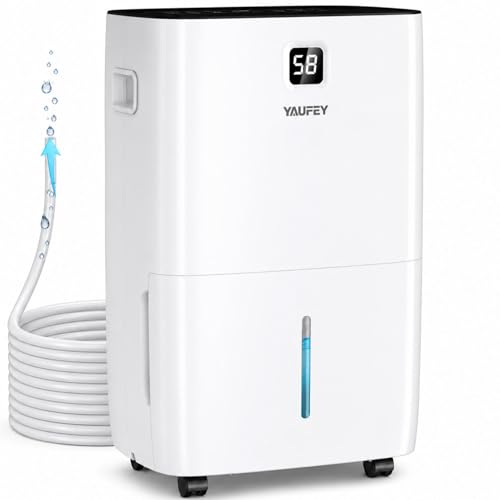


Product images: Amazon listings
Frequently asked questions
Is a pump better than a gravity drain on a dehumidifier?
Neither is better in general. Gravity is simpler and quieter but needs a downhill route; a pump lifts the water to a sink or window but needs cleaning and can fail.
Can I add a pump to a dehumidifier without one?
Yes, with a separate condensate pump placed below the unit's drain outlet. Check the lift, the flow and the safety switch, and how it wires to stop the dehumidifier if it overflows. See our drain accessories ranking.
How far can a gravity drain hose run?
As far as it keeps falling. The hose must slope down all the way, without loops or kinks; a long run needs a steady slope and a hose that does not sag.
References
Independent sources for facts stated in this guide, also linked where the guide states them.
- GE owner's manual APEL50 / APEW50 / APER50 (49-5000427) · a manufacturer manual as an example: garden-hose drain, internal pump, no extension cords, filter care
- ENERGY STAR: dehumidifier buying guidance · capacity in pints per day, the sizing chart, drainage options and lower-temperature models below 65 °F