
Megan Sorensen, Senior editor
I'm the senior editor here, which mostly means I'm the one who says no. No to a model that made the list only because it's cheap this week, no to a capacity claim the manual doesn't back up, and no to a ranking nobody has looked at since the prices moved.
Most days I have three things open side by side: the spec sheet, the owner's manual and the buyer reviews. When a unit says it covers 4,500 sq ft, I want the pints-per-day rating behind that number and the conditions the manufacturer measured it under. When owners keep describing the same problem (a float that sticks, a bucket that drips at the handle, a display that reads well below their own hygrometer), I note it, and it ends up in the ranking notes.
Sizing is the subject I care most about. Pints per day and square feet get mixed up all the time, and the usual result is a unit far bigger than the room needs, or one that never catches up. I write the guides on humidity targets, sizing and musty basements, and I edit most of the others.
When a price or a model changes, the list gets a fresh look, not just a new date. We read, we compare, and we keep the lists current.
Areas of expertise
- Humidity targets and hygrometer readings
- Sizing: pints per day vs square feet
- Musty-basement troubleshooting
- Keeping the rankings current
How I work
- I start from the manual and the spec sheet, not the product title. If a claim isn't in either, it doesn't go into a ranking.
- I read the one- and two-star reviews first, then the good ones, and look for the problems that keep repeating.
- When a price moves or a model is discontinued, the ranking gets checked again before the next update.
- I'd rather leave a model off a list than rank it on a claim I can't trace back to a document.
Articles by Megan Sorensen
Written
 Basement humidity
How to choose a basement dehumidifier: start with the room
A practical buying sequence covering moisture sources, capacity, temperature, drainage and model verification.
Read the guide Basement humidity
 level: what to aim for and how to measure
How to interpret basement relative humidity, choose a sensible target and investigate persistent dampness.
Read the guide Basement humidity
Dehumidifier size chart: how many pints do you need?
Separate extraction capacity, bucket volume and floor coverage when sizing a basement dehumidifier.
Read the guide Basement humidity
Damp basement still musty? A troubleshooting guide
A non-invasive sequence for separating water entry, moisture sources, airflow and dehumidifier operating problems.
Read the guideEdited
 Basement humidity
Dehumidifier pump vs gravity drain: plan the water route
Choose between bucket emptying, continuous gravity drainage and a pump by mapping the actual discharge path.
Read the guide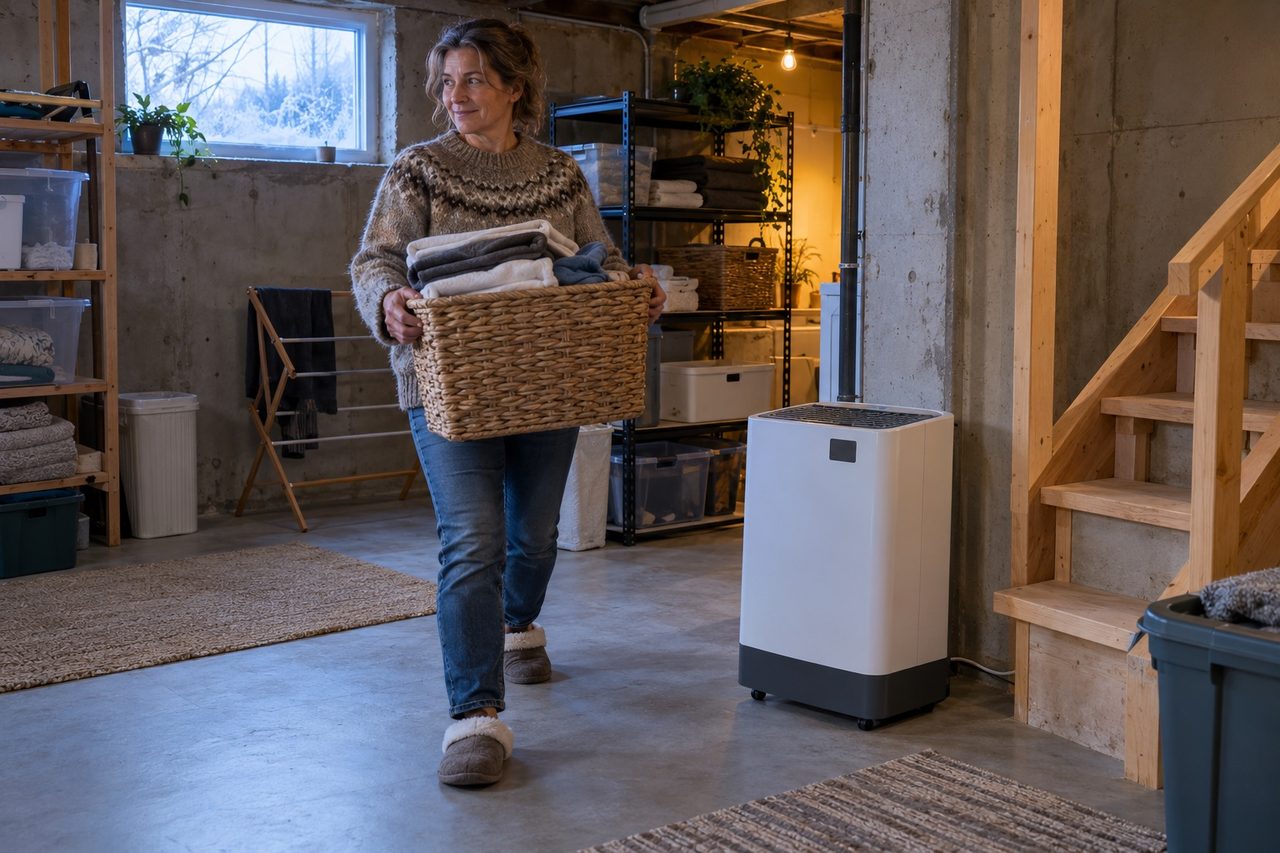 Basement humidity
Cold basement dehumidifier guide: running one below 65 °F
Check room temperature, defrost behavior and exact operating limits before expecting a compressor dehumidifier to perform.
Read the guide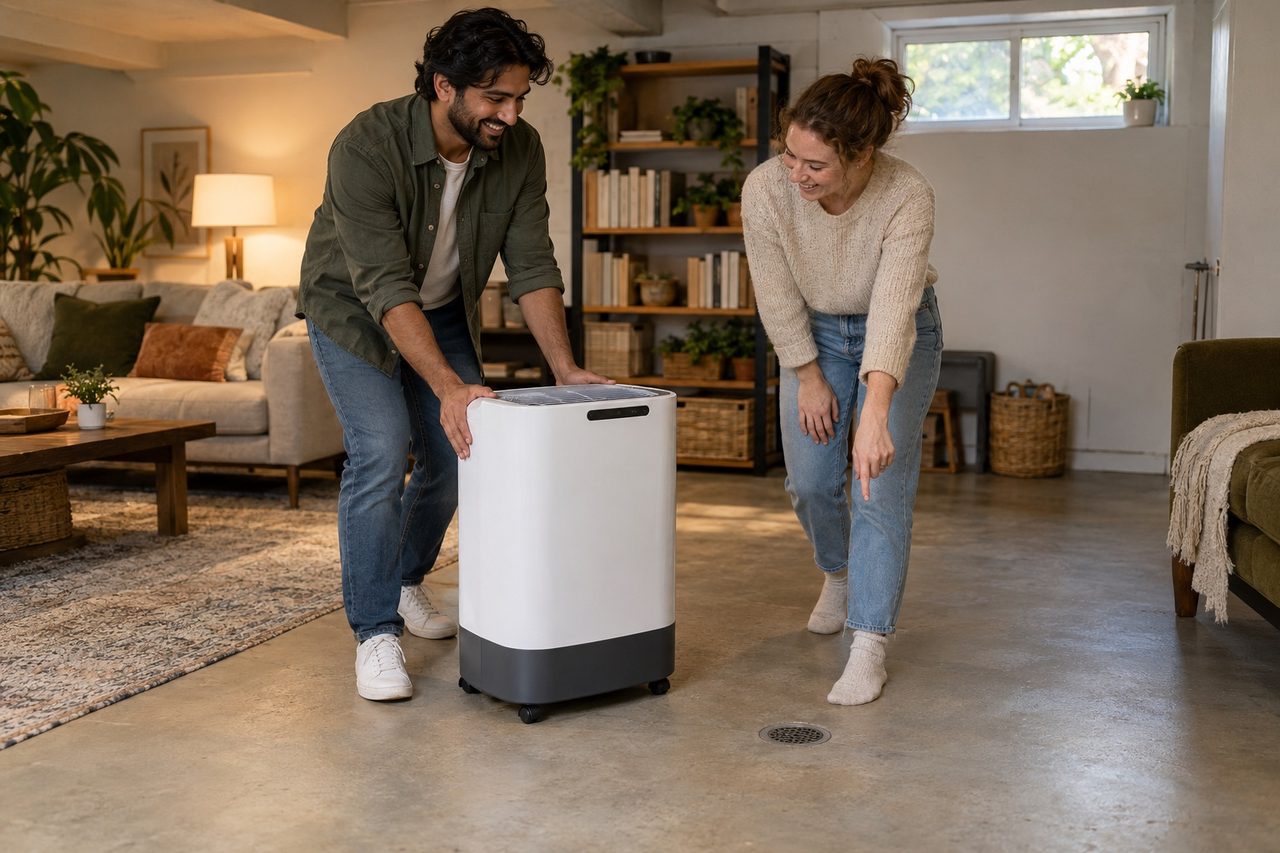 Basement humidity
Where to put a dehumidifier in a basement
Find a basement location that respects the exact manual while keeping water disposal and maintenance practical.
Read the guide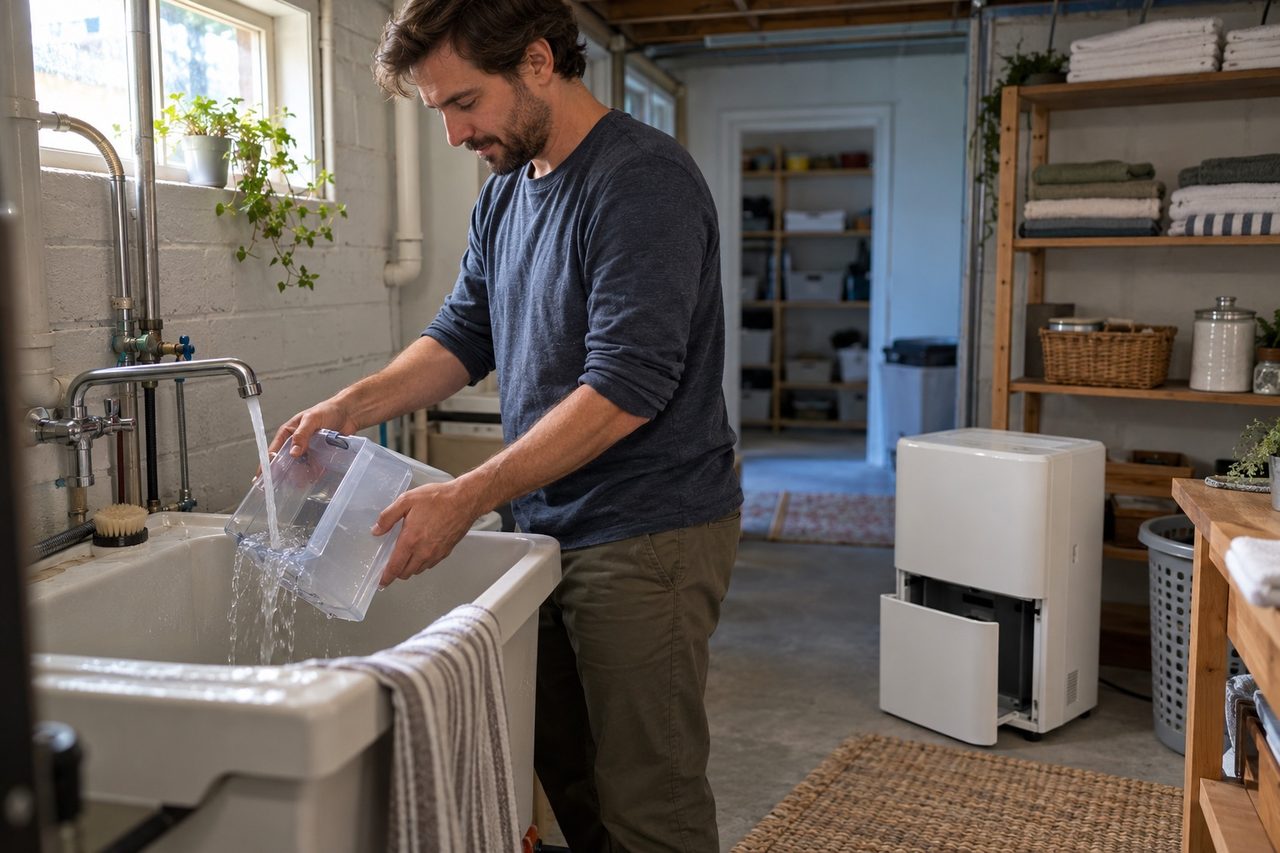 Basement humidity
How to clean a dehumidifier: filter, bucket and drain
Organize filter, bucket and drainage maintenance around your exact appliance manual without improvising repairs.
Read the guide Basement humidity
ENERGY STAR dehumidifiers: how to compare efficiency
Use exact-model certification and Integrated Energy Factor without confusing efficiency with suitability.
Read the guide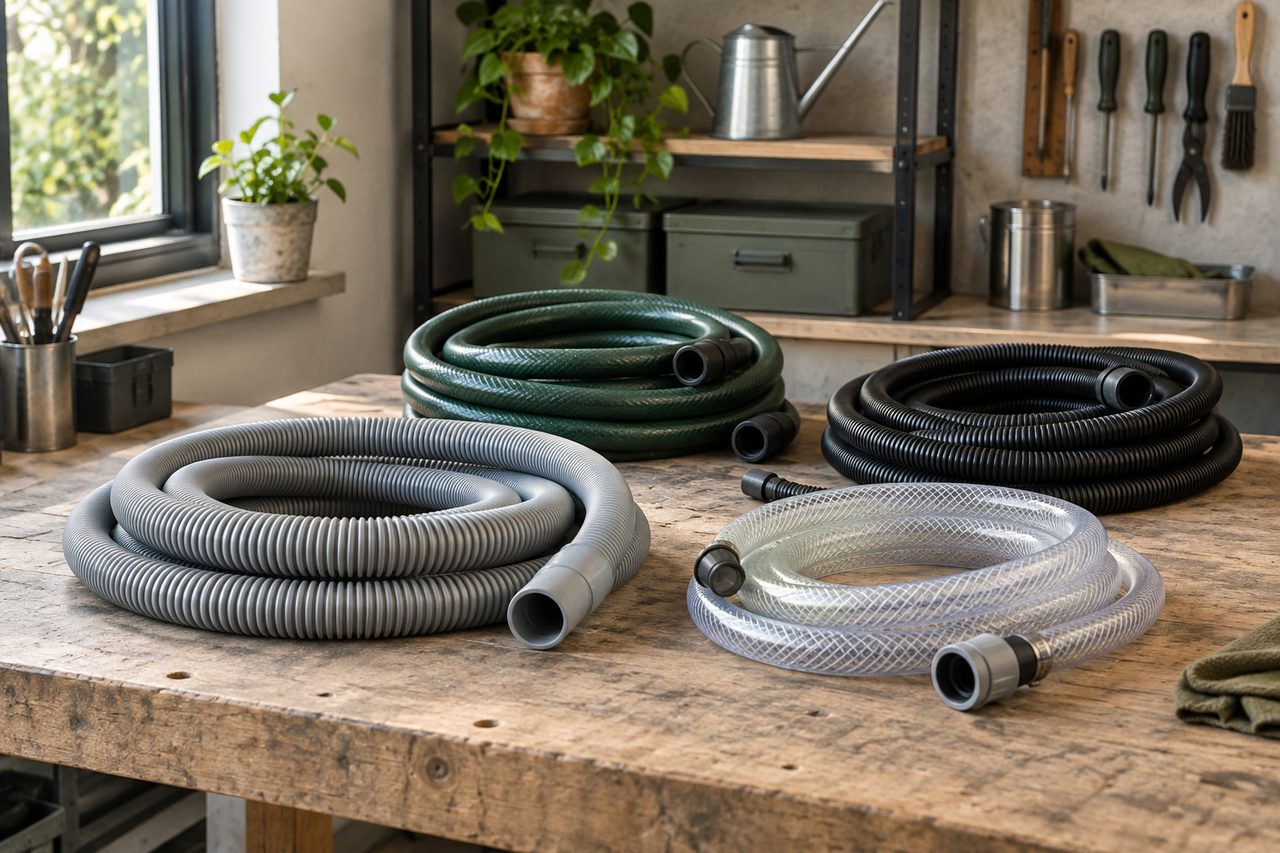 Basement humidity
Dehumidifier drain hose size and fit: check the port first
Check gravity outlets, pump tubing, fittings and model suffixes before ordering a drainage accessory.
Read the guideHow we compare and rate the units is explained on How we rate. The rest of the team: Our editors.