Dehumidifier size chart: how many pints do you need?
Separate extraction capacity, bucket volume and floor coverage when sizing a basement dehumidifier.

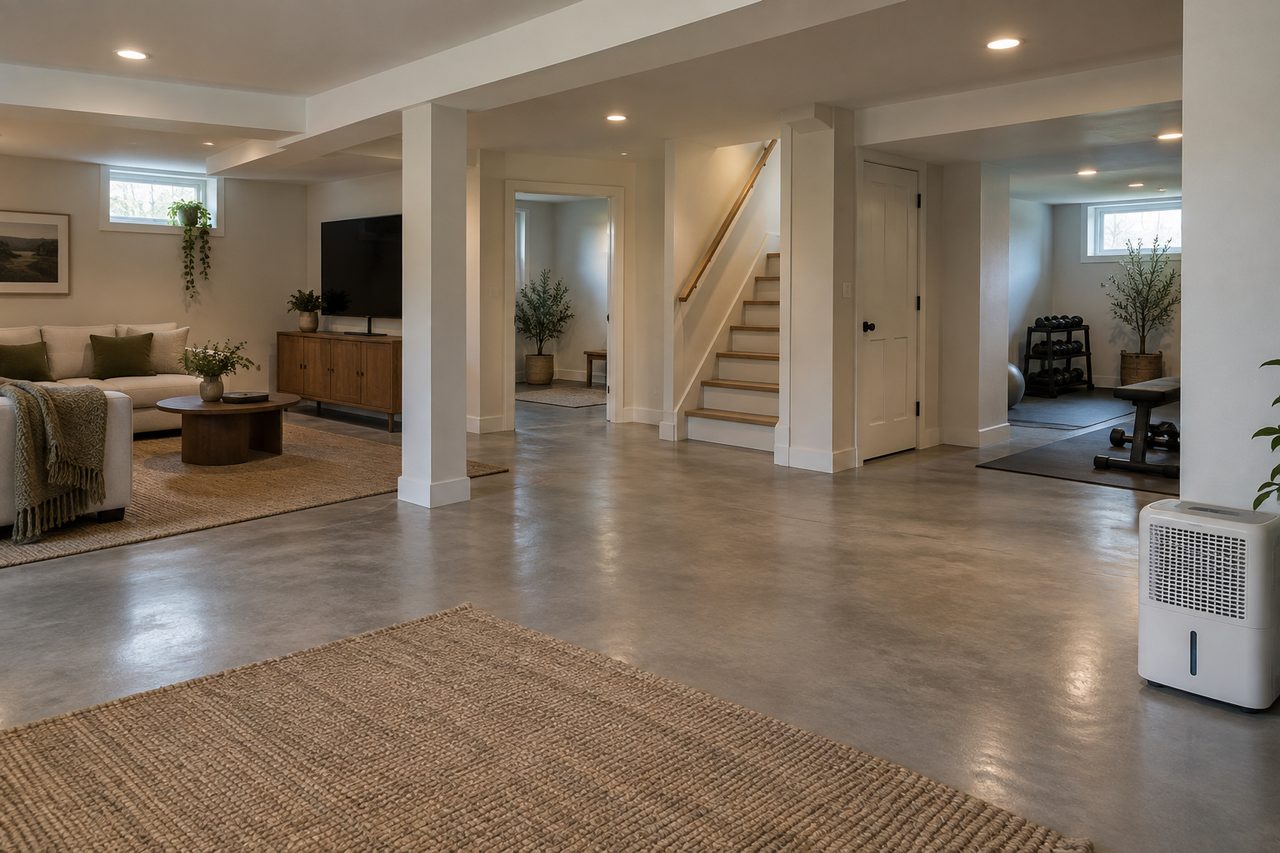
Size a dehumidifier in pints per day from the floor area and how damp the space is: ENERGY STAR's chart starts a basement under about 2,000 sq ft at 20 to 30 pints when damp and up to 50 when wet. Treat the coverage claim on a listing as a best case and compare pints only under the same rating conditions.
Pints per day are easy to compare and easy to misread. The figure is a water-removal rating under set test conditions. It doesn't tell you the bucket size, how much water your basement will give off tomorrow, or whether one unit can reach the closed storage room at the far end. Start with the source chart, then look at where the comparison stops working.
Our rankings for this: best 50 pint dehumidifiers, best commercial dehumidifiers and best basement dehumidifiers.
Affiliate disclosureAs an Amazon Associate we earn from qualifying purchases made through links on this page. Commissions never change our ratings.
Keep three different numbers separate
Make three columns in your buying notes:
- Water removal: pints per day.
- Bucket: collection-bucket volume.
- Coverage: advertised floor area.
Each answers a different question. Extraction capacity concerns the appliance's rated moisture removal. Bucket volume concerns storage between emptying. The coverage statement is a manufacturer or seller claim about application, with assumptions that may not be obvious in a short title.
Do not convert bucket liters into daily extraction capacity or treat a large coverage number as independently verified performance. Our product pages preserve seller-provided features as claims and leave unverified technical fields out of the rating. If the same listing appears to show conflicting capacities, identify the selected variant and find its exact documentation before putting it into your comparison sheet.
Keep these capacity figures within the complete basement buying checklist. Drainage, supported temperature and service access can eliminate a candidate even when its nominal pint rating looks suitable.

Use the ENERGY STAR chart as a starting range
The ENERGY STAR buying guide considers both room area and moisture condition (ENERGY STAR). Its small-to-medium room band below 2,000 square feet gives starting ranges of 20-30 pints per day for slightly to moderately damp conditions, 25-40 for very damp conditions and 30-50 for wet conditions. Its larger-room band uses 30+, 40+ and 50+ respectively.
These broad bands should not be turned into a precise pints-per-square-foot formula. Our selection tool reproduces the bands and flags the approximate 2,000-square-foot boundary. A wet room also needs investigation of seepage or other water entry; choosing from the highest band does not replace repairing the cause.
| Moisture condition | Below about 2,000 sq ft | Larger rooms |
|---|---|---|
| Slightly to moderately damp | 20–30 | 30+ |
| Very damp | 25–40 | 40+ |
| Wet | 30–50 | 50+ |
Record the area that actually shares air
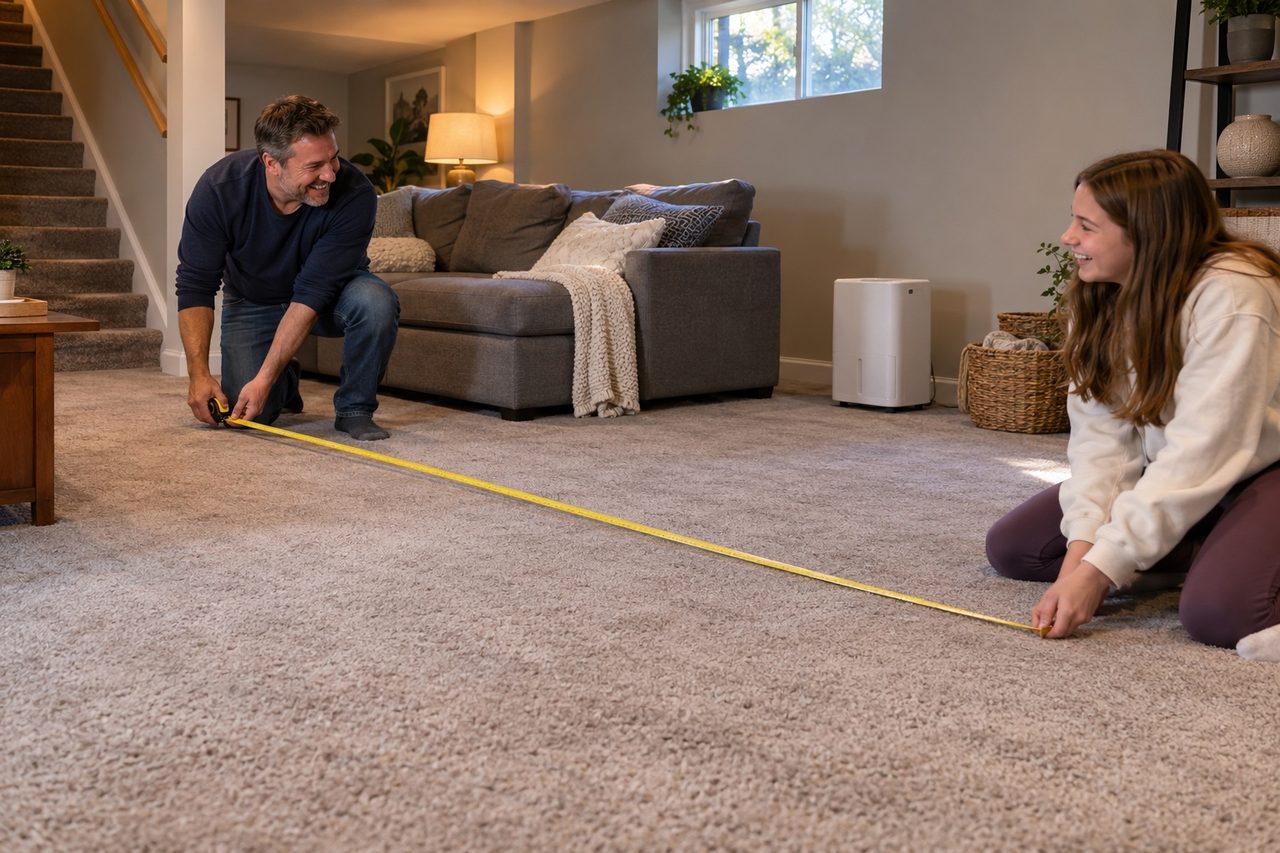
Draw the basement as connected rooms rather than one rectangle. Mark interior doors, storage closets and areas separated by shelving or walls. Measure the spaces you expect one appliance to serve and note which connections are normally open. A dehumidifier needs air exchange with the damp space; advertised coverage does not make a closed room disappear.
Placement can change whether an otherwise reasonable capacity is useful. Read the placement guide before deciding that an appliance is undersized. If several isolated areas need treatment, a qualified assessment of distribution or a different system may be more appropriate than selecting the largest portable unit. Keep your sketch for that discussion so the recommendation is based on the actual layout.
Compare like rating conditions
ENERGY STAR notes that dehumidifier capacity ratings have changed (ENERGY STAR). A historical product with a larger printed pint figure is not automatically stronger than a newer product with a smaller figure. Ask which test basis each number uses, and avoid building a ranking from mixed generations without that explanation.
Basement temperature also matters. A nominal daily rating is not a promise of that collection volume in a cold room at your chosen humidity target. Read cold-basement operation and look for the exact manufacturer temperature range. Automatic defrost is a feature to investigate, not a conversion factor that allows us to calculate cold-room extraction from a listing title. We do not invent such a formula.
Validate the purchase with a room log
Before installation, save a short baseline of humidity, temperature and visible moisture observations. After setup, keep comparable records and note drainage interruptions. A full bucket can stop an appliance that otherwise has enough capacity; a kinked hose can make an unattended installation unreliable. Read the drainage guide while planning the purchase rather than after the first shutoff.
Do not judge capacity only by how quickly a bucket fills. Collection changes with conditions and operation. Assess whether the space reaches and maintains a sensible humidity range while the unit is installed within its instructions. If it cannot, review airflow, moisture entry, operating temperature and controls with the manufacturer before assuming the next larger product is the solution.
Prepare a comparison sheet that exposes uncertainty
For each candidate, write the exact model, nominal pints per day, stated test basis if available, bucket volume, operating-temperature range and source for each entry. Add a separate line for the drainage method. Leave a field blank when its source is missing, and write the question you need answered. This prevents an attractive but incomplete listing from appearing more certain than a documented alternative. Use the same room assumptions for every candidate. If you change the connected area or expected moisture condition halfway through the comparison, update the earlier rows too. Otherwise the spreadsheet can appear consistent while actually comparing different jobs. Keep marketing floor coverage separate from the chart-based starting range. Before ordering, review unresolved questions rather than simply choosing the largest number in the table. A candidate with an unsuitable minimum temperature or unusable water route should not win merely because its nominal capacity is higher. The aim of sizing is to identify an appropriate operating envelope and installation, then verify the result in use with room observations. Keep this worksheet with the purchase record so later changes can be assessed against the original assumptions.
Our rated picks
The three best-rated models of our best 50 pint dehumidifiers ranking, from the buyer review record and the listed specs.


Product images: Amazon listings
Frequently asked questions
How many pints dehumidifier do I need for 1,000 sq ft?
For a moderately damp 1,000 sq ft basement, the ENERGY STAR chart starts around 20 to 30 pints a day under current ratings; go higher if it is wet. Our selection tool applies the chart.
Is a bigger dehumidifier better?
Not always. An oversized unit reaches the set point fast and cycles a lot; an undersized one runs all day and never gets there. Size from measurements, then round up a step for a wet space.
Why does the same unit show two pint figures?
Since 2019 the DOE rating is taken at 65 °F and 60 % humidity. Many listings also print a bigger figure measured at saturation (around 95 °F and 90 %). Compare the same condition across units.
References
Independent sources for facts stated in this guide, also linked where the guide states them.
- ENERGY STAR: dehumidifier buying guidance · capacity in pints per day, the sizing chart, drainage options and lower-temperature models below 65 °F
- ENERGY STAR: how dehumidifier capacity is rated · capacity in pints per day depends on the test conditions; since 2019 portable units are rated at 65 °F instead of 80 °F