Updated November 13, 2026 · 5 dehumidifiers, no paid placements
Best Crawl Space Dehumidifiers with Pump in 2026
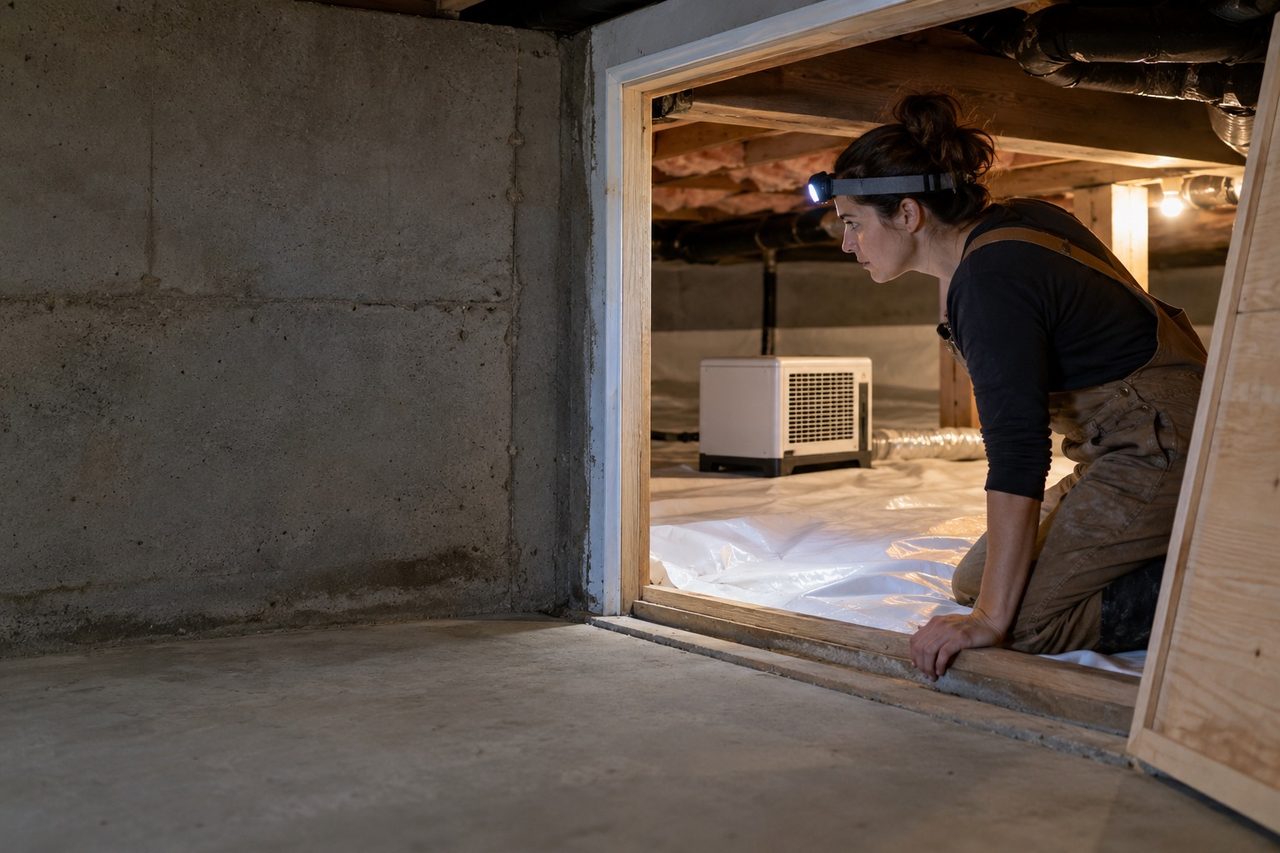
Under the house, the dehumidifier usually sits at the lowest point, so the water has nowhere to go but up. These five crawl space units state a built-in pump in their own listing: the water climbs out through the rim joist or up to the sump, and nobody crawls in with a bucket. Ranked on buyer ratings, review volume and the specs each listing states.
Want the one that's hard to get wrong? Start with the Waykar 125-Pint Crawl Space with Pump. The other four trade capacity, pump lift, warranty and price in their own ways.
The best-rated model for each coverage band its listing states, among the 16 listings eligible for this ranking. Measure the crawl space floor, then find your row.
Measure the climb, not just the distance. Run a tape from the drain outlet on the unit to the highest point the hose has to cross, usually the rim joist or the lip of the sump. Compare it with the lift in the manual of the exact model and keep a couple of feet in reserve.
Keep a gravity way out. Pick a unit that also has a gravity outlet if you can. When the pump clogs or quits, a short hose to a lower drain keeps the crawl space dry until the part arrives.
Plan for the next visit. You will have to reach the filter and the pump reservoir a few times a year. Leave the clearance the manual asks for, hung or standing, and put the unit where you can reach it from the hatch.
Why a crawl space needs the pump more than a basement does
In a basement there's often a floor drain or a sump pit lower than the dehumidifier, and a cheap gravity hose does the job. A crawl space turns that around. The unit sits on the vapor barrier at the lowest point of the house, so the condensate has to climb: through the rim joist to daylight, up to a sump, or over to a laundry drain. That's the pump's whole job, and it's why nine of the 16 eligible listings bother to print a lift height (16.4 to 19.6 ft).
Our favourite setup is a pump unit that keeps a gravity outlet as a fallback: eight of the listings mention one or ship a second hose for it. Pumps tend to fail the boring way, with sludge in the inlet, and usually in a humid week while you're away. The crawl space ranking also covers units that drain by gravity alone, and if the unit is going into a regular basement, the dehumidifiers with pump ranking is the better list.
Measure the climb before you buy
Lift is the one number on these listings that decides whether the unit works in your crawl space or just sits there with a full reservoir. Grab a tape measure and a flashlight. Start at the drain outlet on the unit, follow the route the hose will take, and note the highest point it has to cross: the rim joist if the water goes outside, the lip of the sump pit, or a laundry standpipe. That height plus a couple of feet of margin is your number. Long sideways runs matter too, so check how much hose the manual of the exact model allows.
Where the hose leaves the house, keep the end clear of the foundation and out of the frost. A hose frozen solid in January backs the water up into the unit. Send it somewhere that slopes away, a downspout line or open ground, not the flower bed under the crawl space vent.
Crawl space dehumidifier with pump sizing: 70 vs 80-125 vs 200+ pints
The 16 eligible listings grouped by the pints per day they state. Seven of them give the figure at saturation (around 95 °F and 90 % humidity), so a 125-pint label here is not the same ruler as a 50-pint home unit. Coverage is the seller's own claim.
Honestly, most sealed crawl spaces under a regular house don't need the top row. The big units earn their keep after a flood, under a large footprint or in a space that stays wet for weeks. For a mildly damp, sealed crawl space, the 70-pint class with a pump is the sensible start, and the sizing guide explains how to check it against your own readings.
A pump plus a gravity outlet
Eight of the 16 listings mention a gravity drain next to the pump or ship a second hose for it. That's the setup we'd pick for a crawl space you visit twice a year. If the pump ever clogs or quits, a short hose to a lower drain or a bucket keeps the space dry until the part arrives. Read what the unit does when the pump fails or the hose is blocked; you want it to stop, not to overflow onto the vapor barrier.
Upkeep is dull but short: rinse the filter, flush the pump reservoir and check the hose for kinks and sludge, as the manual of your model describes. The gravity drain vs pump guide covers the fittings, and the drain accessories ranking has hoses and separate condensate pumps if you ever need a spare.
Hang it or stand it on the barrier
Eight of the eligible listings mention a hanging kit or mounting between the floor joists. Hanging keeps the unit off a floor that gets wet, leaves the floor free for crawling past, and makes the gravity backup easier to route. The rest stand on the barrier; a pair of level pavers stops them from sinking into the plastic. Either way, leave the clearance the manual asks for around the intake and keep the filter reachable from the hatch. The whole job, step by step, is in our crawl space dehumidifier installation guide. Eight of the 16 listings mention auto-defrost, which matters in a crawl space that sits in the 40s °F through March; see the cold-basement guide.
What a pump unit won't fix
The pump moves the condensate the dehumidifier collects. It's not a sump pump, and it won't keep up with groundwater. If water stands on the barrier after a storm, fix the drainage first (grading, downspouts, a sump), close the vents and seal the barrier, then let the dehumidifier hold the air at your set point. When water is coming in, that's a job for a contractor, not for a bigger machine.
Comparison table
All 5 on one screen. Tap a column header to sort by what matters in your basement: pints, square feet, or where the water goes.
Comparison table: Best Crawl Space Dehumidifiers with Pump in 2026
† Prices as of Nov 17, 2026; they may have changed. The button always shows today's price.
How we rank
Every model gets a rating out of 10 from its exact listing: what buyers give it, how many of them there are, and how completely the seller documents the specs. The highest unrounded result wins; on an exact tie, the listing identifier decides.
Our editors also weigh how the models compare with each other, and that call is part of the score. A commission never moves a rating or a rank.
45 % buyer rating, damped when a listing has fewer than 50 reviews.
35 % review volume, on a logarithmic scale up to 5,000 reviews.
20 % documentation: feature bullets, images and stated brand of the listing.
Pints per day, coverage and drainage are shown only when the exact listing states them. They are the seller's figures, and test conditions vary from seller to seller.
Prices carry the date we recorded them. They may have changed since; the button shows today's offer.
Frequently asked questions
Which is the best crawl space dehumidifier with a pump in 2026?
Our pick is the Waykar 125-Pint Crawl Space with Pump, at 9.3/10 (excellent). It has 1,018 buyer reviews averaging 4.2/5, and its listing states 125 pints/day and up to 6,500 sq ft. Close behind: the Yaufey 216-Pint Commercial with Pump at 8.0/10.
How is this ranking built?
We start from 16 crawl-space dehumidifiers whose own listing states a built-in pump, each with a buyer review record. Each one gets a rating out of 10 built on the buyer rating (45 %), the number of reviews (35 %) and how completely the listing documents its specs (20 %), plus our editors' read of how the models compare. The highest score ranks first.
Do I need a pump on a crawl space dehumidifier?
If the water can't run downhill from the unit to a drain or to daylight, yes. In most crawl spaces it can't, because the unit sits at the lowest point of the house. Nine of the 16 eligible listings state how high their pump lifts: 16.4 to 19.6 ft.
How high can a crawl space dehumidifier pump water?
The listings here that state a lift claim 16.4 to 19.6 ft. Measure from the unit's outlet to the highest point the hose crosses (usually the rim joist or the lip of the sump), add a couple of feet of margin, and check the figure in the manual of the exact model.
How much does a crawl space dehumidifier with pump cost?
Among the 15 eligible listings with a recorded price: $376 (CADPXS 80-Pint Commercial with Pump) to $2,508 (AprilAire E100W Smart Wi-Fi), median $480, on Nov 17, 2026. Prices may have changed since. A vapor barrier and a drain line come on top.
Can a crawl space dehumidifier with a pump hang from the joists?
Some can. Eight of the 16 eligible listings mention a hanging kit or mounting between the floor joists. Use the supports the maker specifies, and keep the filter and the pump inlet within reach.
What size crawl space dehumidifier with pump do I need?
The listings here state 70 to 216 pints a day, and seven of them give that figure at saturation (around 95 °F and 90 % humidity). A sealed, mildly damp crawl space sits at the low end; a large or wet one needs more. Size from your own humidity log with the sizing guide, not from the coverage claim.
Is a crawl space dehumidifier with pump worth it over a gravity model?
If there's a drain lower than the unit along the whole route, a gravity model is simpler, and one less part can fail. If not, the pump is what lets the unit run on its own; without it you're back to a bucket in the least pleasant room of the house.
Are the prices up to date?
Each price is the one we recorded on Nov 17, 2026, and it may have changed since. The button always opens the exact listing with today's price and seller.
Ratings, ranks and specifications on this page come from each dehumidifier's exact listing and its buyer reviews, weighed by our published method; prices carry the date we recorded them. The references explain the terms used in this ranking; we link a manufacturer page only when it names the exact model.