Updated November 13, 2026 · 11 guides
Basement dehumidifier buying guides
Twenty minutes of reading can save you a unit that ices up in March, a hose that runs uphill or a 120-pint machine for a 600 sq ft room. Humidity targets, sizing in pints per day, gravity drain or pump, cold basements, placement, cleaning and running costs, explained from the manuals and published guidance.
Basement humidity
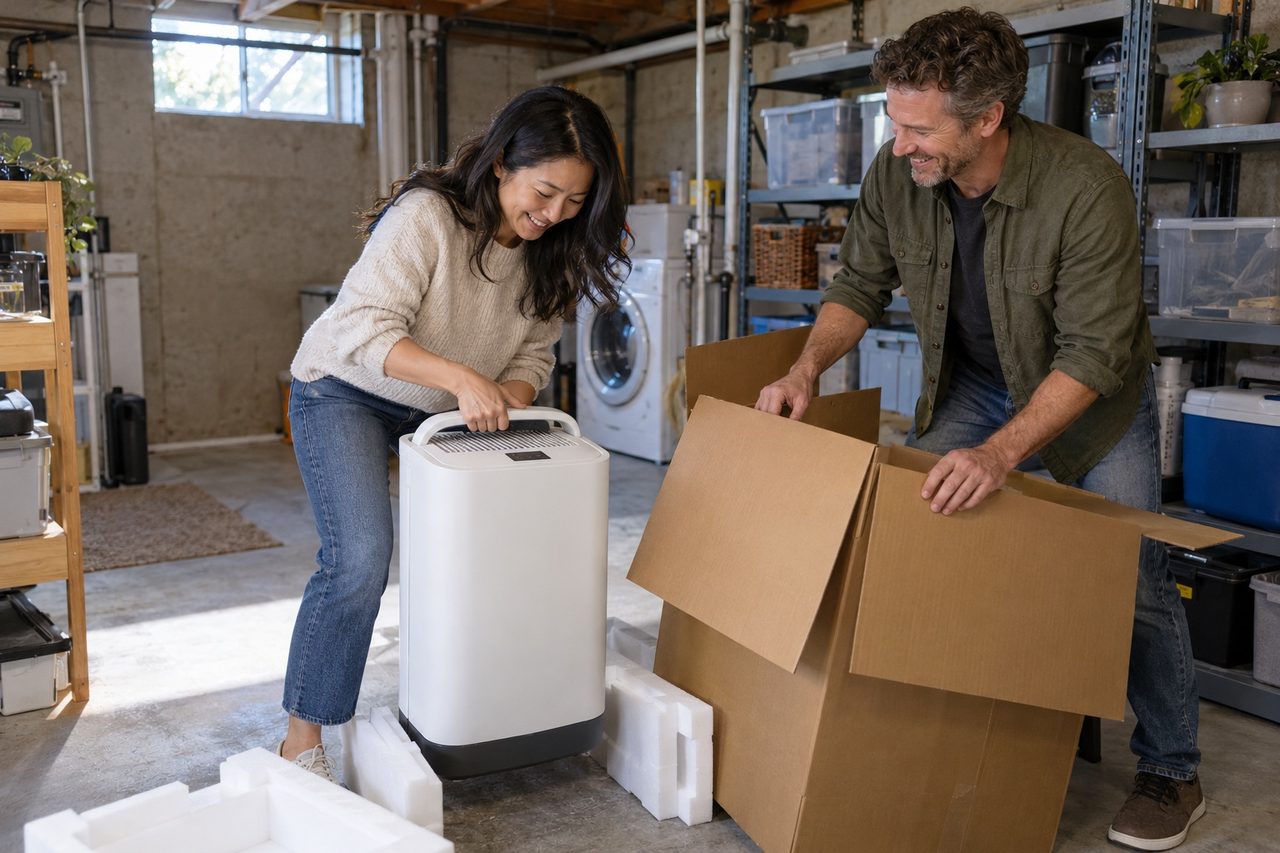 Basement humidity
How to choose a basement dehumidifier: start with the room
A practical buying sequence covering moisture sources, capacity, temperature, drainage and model verification.
Read the guide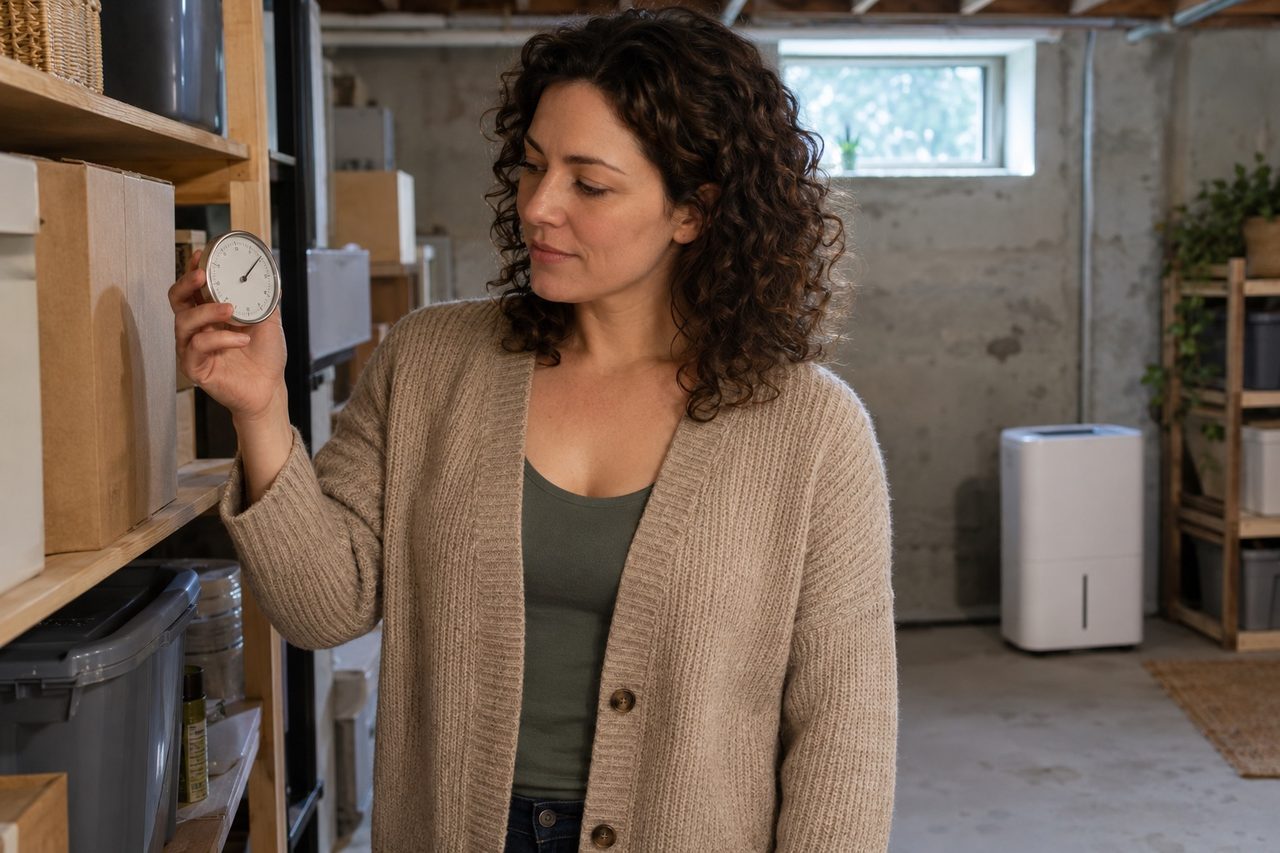 Basement humidity
 level: what to aim for and how to measure
How to interpret basement relative humidity, choose a sensible target and investigate persistent dampness.
Read the guide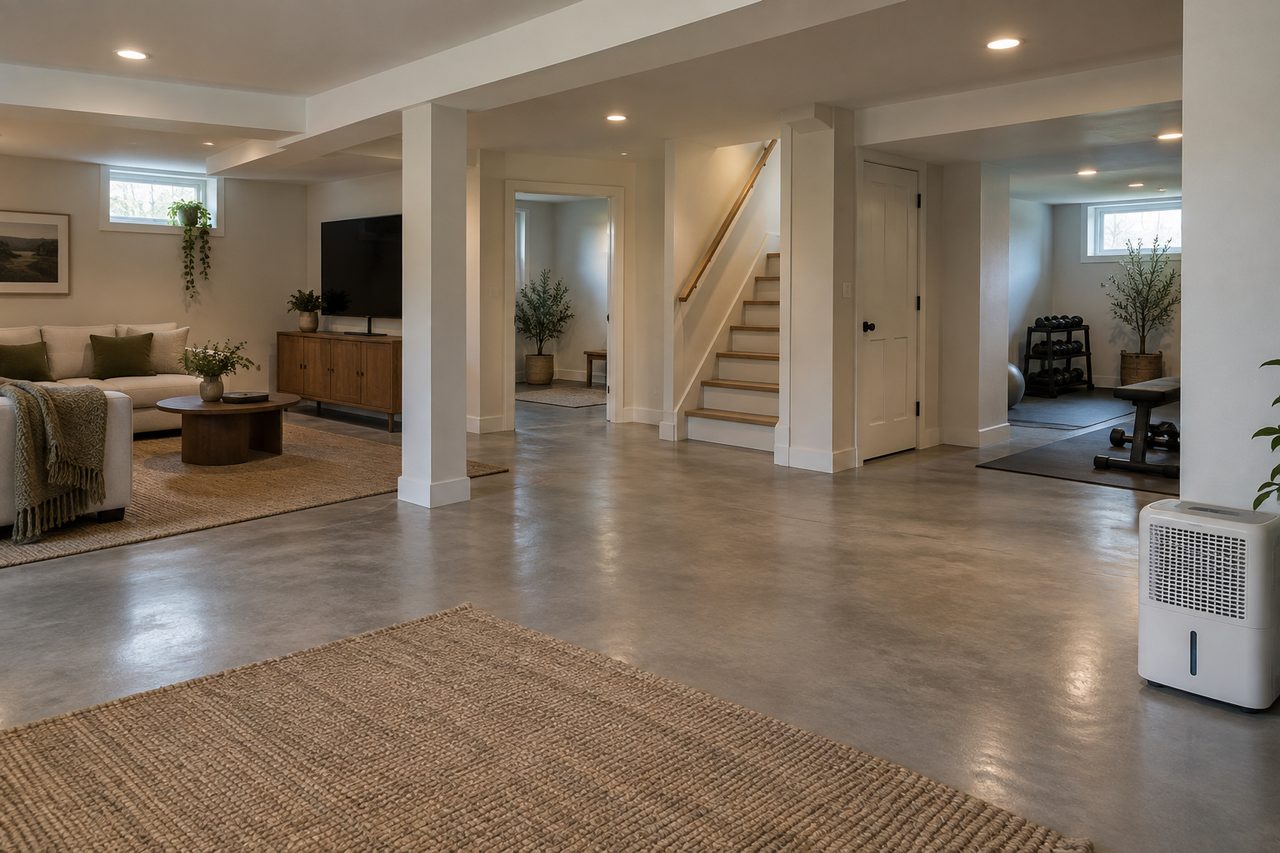 Basement humidity
Dehumidifier size chart: how many pints do you need?
Separate extraction capacity, bucket volume and floor coverage when sizing a basement dehumidifier.
Read the guide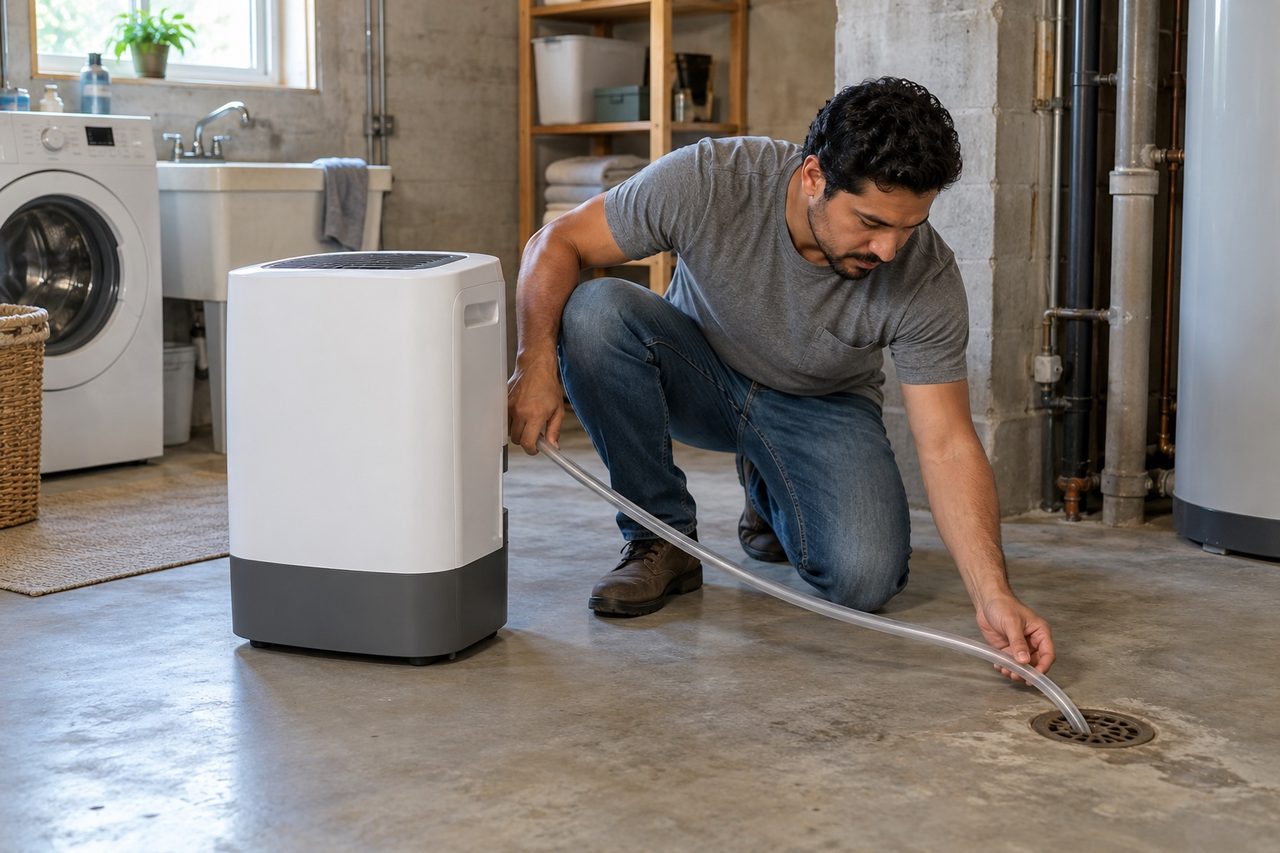 Basement humidity
Dehumidifier pump vs gravity drain: plan the water route
Choose between bucket emptying, continuous gravity drainage and a pump by mapping the actual discharge path.
Read the guide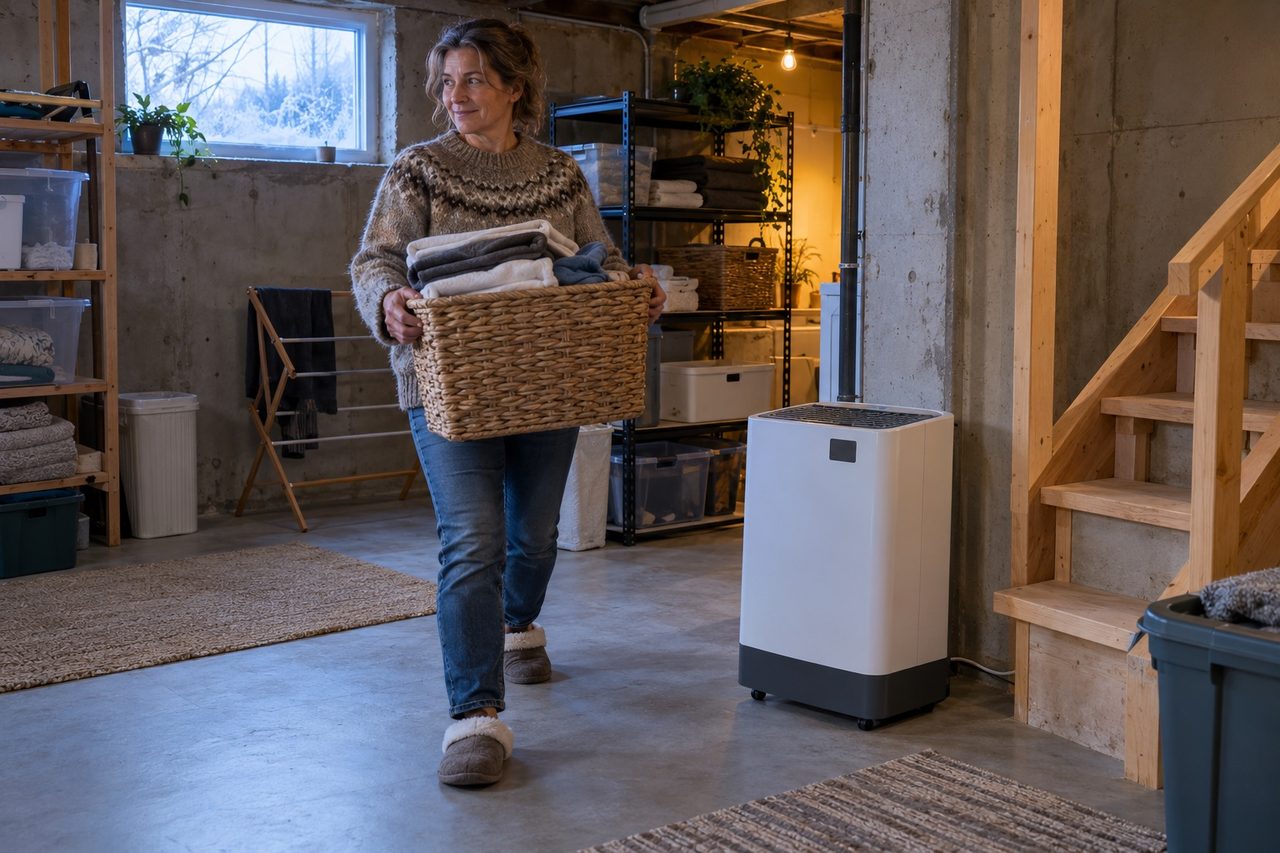 Basement humidity
Cold basement dehumidifier guide: running one below 65 °F
Check room temperature, defrost behavior and exact operating limits before expecting a compressor dehumidifier to perform.
Read the guide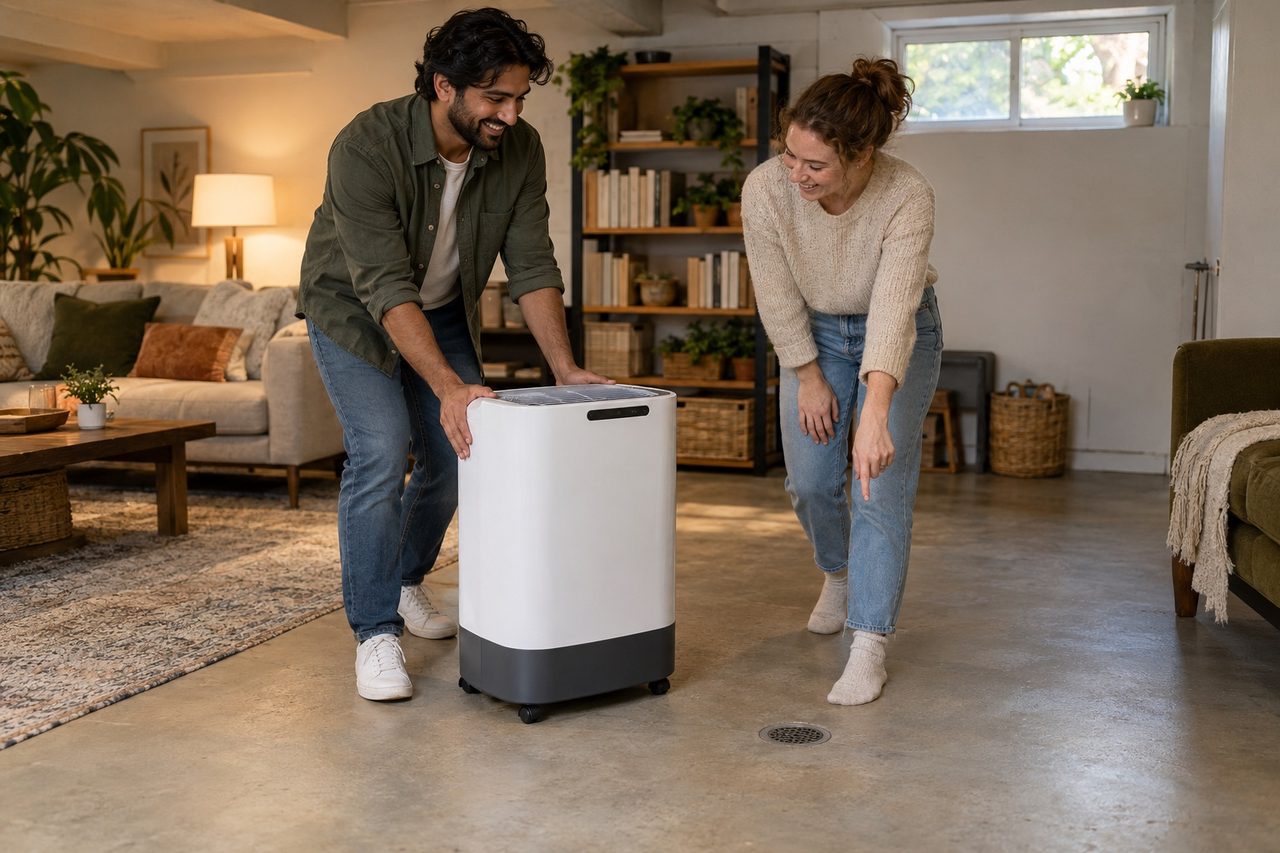 Basement humidity
Where to put a dehumidifier in a basement
Find a basement location that respects the exact manual while keeping water disposal and maintenance practical.
Read the guide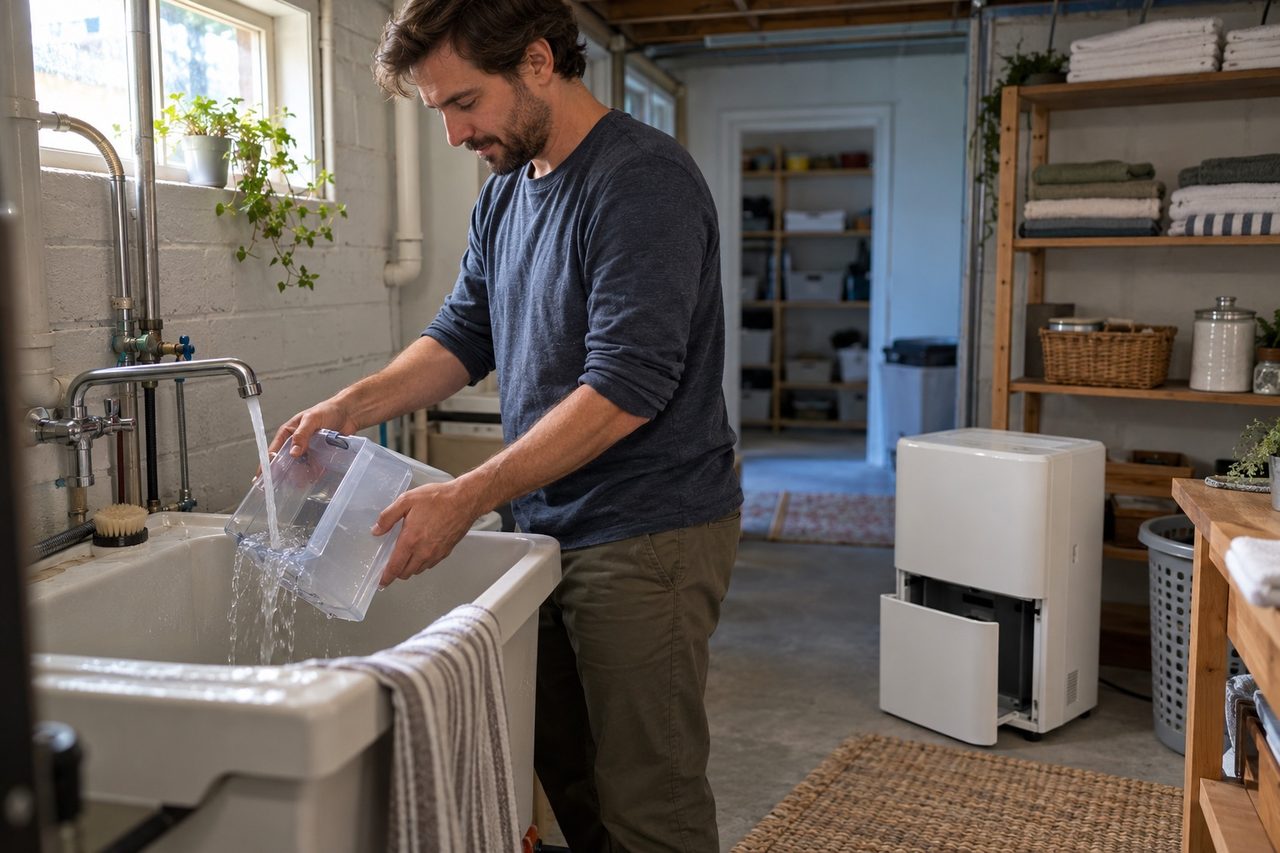 Basement humidity
How to clean a dehumidifier: filter, bucket and drain
Organize filter, bucket and drainage maintenance around your exact appliance manual without improvising repairs.
Read the guide Basement humidity
ENERGY STAR dehumidifiers: how to compare efficiency
Use exact-model certification and Integrated Energy Factor without confusing efficiency with suitability.
Read the guide Basement humidity
Damp basement still musty? A troubleshooting guide
A non-invasive sequence for separating water entry, moisture sources, airflow and dehumidifier operating problems.
Read the guide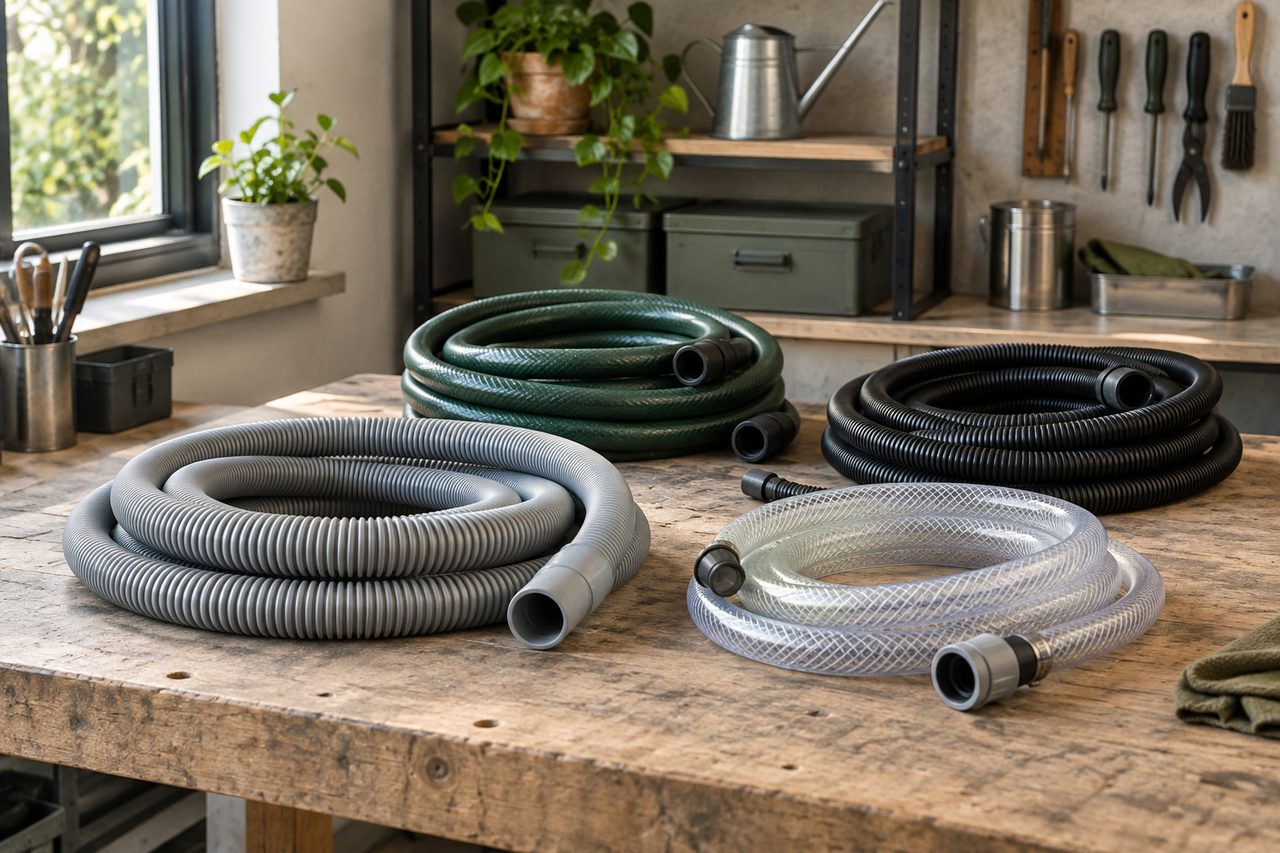 Basement humidity
Dehumidifier drain hose size and fit: check the port first
Check gravity outlets, pump tubing, fittings and model suffixes before ordering a drainage accessory.
Read the guide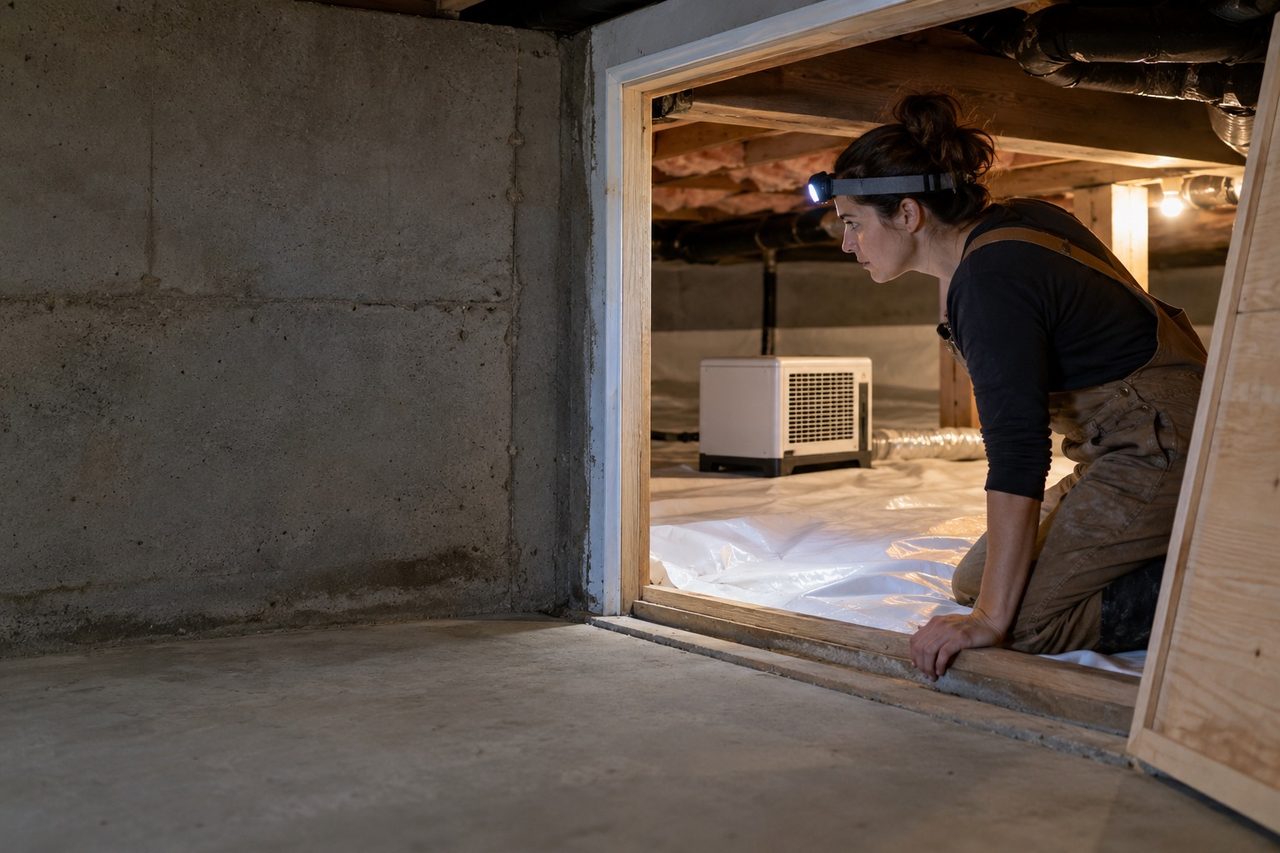 Basement humidity
Crawl space dehumidifier installation: DIY steps, drain options and real costs
How to install a crawl space dehumidifier yourself: seal first, pick the spot, choose pump or gravity drain, and what the unit, parts and power cost.
Read the guideReferences used in our guides
Independent sources cited inside the guides, each linked at the sentence it supports.
- EPA: A Brief Guide to Mold, Moisture and Your Home · indoor humidity below 60 %, ideally 30 to 50 %; fix the water problem as well as the mold
- ENERGY STAR: dehumidifier buying guidance · capacity in pints per day, the sizing chart, drainage options and lower-temperature models below 65 °F
- ENERGY STAR: how dehumidifier capacity is rated · capacity in pints per day depends on the test conditions; since 2019 portable units are rated at 65 °F instead of 80 °F
- GE owner's manual APEL50 / APEW50 / APER50 (49-5000427) · a manufacturer manual as an example: garden-hose drain, internal pump, no extension cords, filter care
- ENERGY STAR: dehumidifier key efficiency criteria · what ENERGY STAR certification requires: a minimum integrated energy factor (liters per kWh)
- How we rate: our methodology · how buyer rating, review volume and documentation are weighed